AI Personalization
AI Personalization: Definition, Benefits & Real-World Examples


AI Personalization is using AI methods to enhance our online business. AI personalization is basically enhancing customer interactions, allowing us to interact better with customers, understand their experience, and develop their interests.
We are using this technology to gain insights and develop real-time personalization. We are gaining benefits and also facing some challenges with AI. About 71% are gaining benefits, while 40% aren’t. Those who are doing well with AI are gaining advantages, while others aren’t.
This is being used across industries to improve B2B business and communication. We are understanding customer intent, analyzing demographic data, browsing history, and purchase records to understand their preferences.
Improved customer satisfaction, increased conversion rates, enhanced customer loyalty, and better decision-making are the benefits of AI personalization. In this article, we discussed what AI personalization is, its applications and types, real-world examples of personalization, and how it works, essentially covering the uses of AI and its impact on personalization.
Application of AI Personalization
AI personalization has numerous applications, is vast, and has helped us make progress in our online business. It’s playing a significant role in the digital world. Some of the applications of AI personalization include:
- E-Commerce
- Entertainment
- Training and Education
- Finance
- Marketing
E-commerce
AI has played a significant role in e-commerce, taking it to an advanced level. We are showing products to users based on their intent, thanks to AI. We are analyzing their activity, likes, and data to understand their preferences and recommend products.
We are checking their browsing history, purchases, and search records to understand what they are interested in. This helps us build a strong bond with customers, making online shopping more attractive and creating an engaging interface.

Seventy percent (70%) of e-commerce decision-makers believe that AI has significantly improved e-commerce personalization.
For Example, 73% of customers are influenced by personalized recommendations. Netflix recommends movies and seasons based on our viewing history, and Amazon’s “Recommend for you” option is also AI-driven. This is how AI is driving e-commerce forward.
Entertainment
The Entertainment world is becoming increasingly complex, and AI is behind it. AI has revolutionized the entertainment industry, transforming videos, games, films, and more. It has emerged as a powerful technology, analyzing data, identifying patterns, and making predictions.
AI’s benefits are numerous, and it’s changing the world, playing a significant role in entertainment. As it evolves, it brings both benefits and drawbacks. We need to consider its challenges, sponsorship, and user needs to determine what’s beneficial and what’s not.

AI is increasing user engagement, creating stunning images and views, and developing games with realistic graphics. It’s helping create movies, scripts, and characters, and speeding up video production.
71% of users want personalized content, while 67% feel companies aren’t meeting their needs, leading to frustration.
Training and Education
AI is making rapid progress, and its impact on education has been significant. Since AI entered the education sector, it’s been performing better than traditional methods. Initially, human teachers were considered best, but now AI is considered more effective as it caters to each student’s level and needs.
AI analyzes students’ data, understands their interests, and provides personalized learning experiences. It bridges the gap between high-achieving and struggling students, enabling both groups to progress. Struggling students can use AI-powered tools to catch up, while high-achieving students can further excel.

AI has developed advanced methods, allowing us to generate customized data and content. This personalization is achieved through artificial intelligence, machine learning, and natural language processing. It’s using these tools to collect data, analyze user behaviour, make real-time predictions, and provide feedback, all to deliver personalized experiences.
AI personalization utilizes machine learning, natural language processing, and generative AI to analyze data, user behaviour, and history, driving innovative solutions and inventions.
Finance
AI personalization in finance refers to the use of artificial intelligence technologies, such as machine learning and natural language processing, to understand customer behaviour, preferences, and life stages, and provide customized financial services accordingly.
This improves decision-making, reduces risk, and increases operational efficiency, ultimately strengthening customer trust and driving business growth. AI applications in finance are helpful in areas like credit scoring, fraud detection, portfolio management, and regulatory compliance.

They help manage investments, ensure adherence to legal rules, and provide instant customer support through chatbots. With AI, finance companies can boost growth and increase customer trust levels.
Marketing
AI is transforming marketing by enabling brands to communicate effectively on a large scale. Through machine learning and digital technologies, AI helps businesses understand their customers, tailor their offerings, and deliver personalized products, thereby revolutionizing marketing.
Companies are leveraging AI to automate routine tasks and deliver targeted messages at the right time, enhancing engagement and positively impacting customers. While strategic planning and creative thinking remain human strengths, AI improves marketing by making messages more personal, automating tasks, and making campaigns more effective.
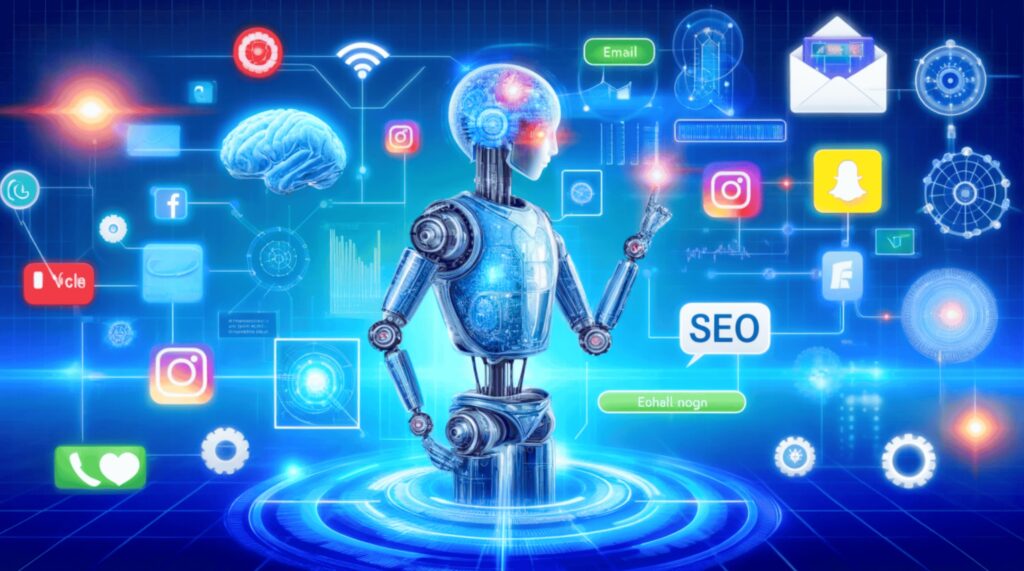
How AI Personalization works
It works in 4 main steps where artificial intelligence analyzes user data to deliver customizedcontent, products,or experiences to each individual user.
- Data Collection
- Machine Learning Models
- Real Time Predictions
- Feedback Loop
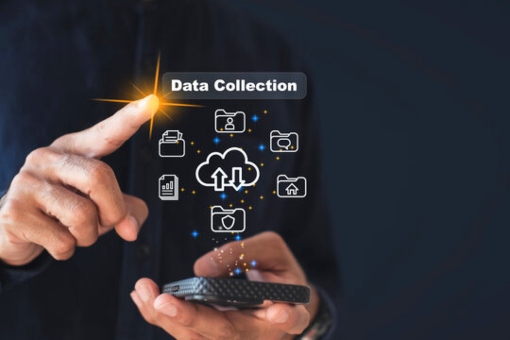
Data Collection
AI personalization collects data on users’ history and actions, analyzing their behaviour and preferences. It’s providing personalized learning materials to students and playing a significant role in the entertainment industry.
Data collection is the first step in AI personalization. By collecting and analyzing data, AI provides users with tailored functions and recommendations. For instance, Amazon’s “Recommended for you” feature showcases products based on an individual user’s interests and preferences.
Machine Learning Models
AI personalization is playing a significant role through machine learning. Machine learning algorithms identify user intents, recognize patterns, and create real-time updates. It’s enabling pattern recognition, segmentation, and more.
With machine learning, we are understanding user behaviour, interests, and preferences. We are analyzing their time spent on apps, purchase history, and predicting future actions. This helps us create AI personalization that makes life easier for people.

This helps us understand what users have bought and predict what they will buy next or what they are interested in. We start creating those products and enhance our online business accordingly. In short, Machine learning algorithms collect data, and we use it to enhance our online business and services.
Real Time Predictions
Real-time prediction means providing users with data and features instantly, based on their intent and preferences, so they interact more with our website and platform, and our bond gets better. It’s a key aspect of AI personalization, enabled by machine learning models and algorithms that recognize patterns.
We are creating interesting images and features so users develop interest and spend more time. This is making online digital work really important these days.
Feedback Loop
The feedback loop creates a connection between users and businesses. It is a process where we connect with customers, understand their queries and intent, and create things to gather their feedback.
There are two types: implicit feedback, where we indirectly understand user behaviour, and explicit feedback, where we directly contact users.
The feedback loop involves three processes: data collection, analysis, and action. We collect user data, analyze it to identify changes needed in our business, and take action to implement those changes.
Types of AI Personalization
AI personalization can be divided into several major types based on how data is used and how experiences are customized.
- Content personalization
- Dynamic pricing
- Demographic Personalization
- Hyper Personalization
Content personalization
Content personalization transforms generic interactions into one-to-one relationships, fostering long-term connections. Whether it’s website experiences, emails, SMS, or social media, the goal is to deliver what the customer is seeking, based on what we know about them.

Dynamic Pricing
Dynamic pricing leverages machine learning and advanced algorithms to adjust prices in real-time, based on demand, competition, and market conditions. By continuously analyzing vast data sets, it identifies the optimal price point, maximizing profitability and competitiveness. This is widely used in various sectors, including retail, e-commerce, hospitality, transportation, airlines, and the energy sector.

Demographic personalization
Demographic personalization is a marketing strategy that divides a broad audience into specific groups based on characteristics such as gender, income, education, marital status, ethnicity, location, and occupation.
It enables brands to align products, messages, and marketing strategies with specific audience groups, which is crucial for business growth.

Hyper-Personalization
Hyper-personalization is an advanced marketing and business strategy that uses artificial intelligence, machine learning, generative AI, real-time data, and behavioral analytics to deliver highly individualized customer experiences.
Unlike traditional personalization, which may only use basic details such as a customer’s name or past purchases, hyper-personalization analyzes deeper and more granular data points, including browsing behavior, location, preferences, contextual factors (such as time of day or weather), demographics, and real-time interactions.

Real World AI Personalization Examples
In the real world, AI systems analyze user behaviour, preferences, and interaction patterns to deliver customized content, product recommendations, and services. Below are some practical examples of how AI personalization is implemented by major platforms and organizations.
- Personalized Product Recommendations
- AI-Powered Chatbots
- Personalized Website Content
- Personalized Email Content
- Personalized Ad Targeting
Personalized Product Recommendations
AI-powered recommendations have become essential in today’s digital economy because modern customers expect highly personalized experiences. Businesses that fail to deliver personalization risk losing brand trust, customer loyalty, and long-term revenue growth.
AI recommendation systems utilize advanced algorithms and machine learning models to analyze customer behavior, browsing patterns, purchase history, location data, demographics, and contextual signals such as time of day and device type. By processing this real-time data, AI can predict user preferences and deliver highly relevant product suggestions at the right moment.

These personalized recommendations are delivered across multiple touchpoints, including websites, mobile apps, email marketing, SMS campaigns, and even messaging platforms like WhatsApp. As a result, businesses can create a seamless omnichannel experience that increases engagement, improves conversion rates, and strengthens long-term customer relationships.
AI-Powered Chatbots
AI chatbots are more advanced. They use technologies like Natural Language Processing, Natural Language Understanding, and Machine Learning to understand user intent and respond in a human-like way. They can learn from interactions, improve over time, provide personalized responses, recommend products, and assist customers 24/7.
Generative AI chatbots represent the next evolution. They use Large Language Models and deep learning to not only respond to questions but also generate new content. Businesses use AI chatbots not only for customer service but also to support internal teams. For example, sales chatbots can train employees by simulating real sales conversations and objection handling.

Personalized Website Content
Website personalization is the process where we deliver customized website experiences to individual users based on their data, preferences, and behavior.They use data such as browsing history, purchase history, demographics, location, device type, and real-time behavior to provide the right content at the right time.
Modern website personalization focuses on one-to-one interactions rather than generic or segmented experiences. It dynamically adapts website content in real time to meet individual user needs, rather than relying only on average customer profiles.
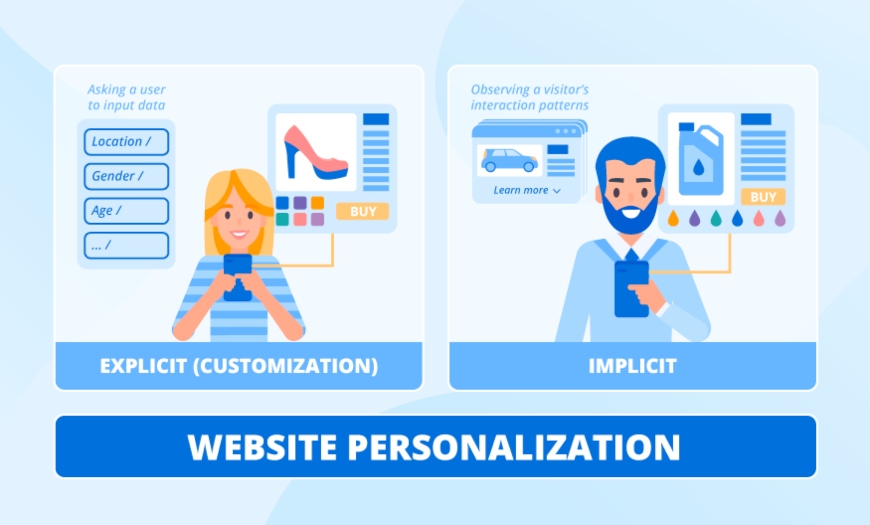
This approach increases user engagement, improves conversions, strengthens customer relationships, and creates competitive value. Website personalization transforms websites from static, one-size-fits-all platforms into intelligent systems that deliver relevant, engaging, and individualized digital experiences.
Personalized Email Content
Personalized Email Content is a strategy where businesses use subscriber data to create customized, relevant, and engaging email experiences. Instead of sending generic mass emails, businesses tailor content based on individual data such as name, location, age, gender, purchase history, browsing behavior, company, interests, and engagement patterns.
The goal of email personalization is to create a one-to-one experience, making emails feel like conversations rather than promotions. This helps brands build strong emotional connections with subscribers.

Personalized emails increase engagement, open rates, click-through rates, revenue, and customer loyalty. It converts bulk email marketing into meaningful, data-driven communication, delivering the right message at the right time to the right person.
Personalized Ad Targeting
Personalized advertising is data-driven marketing strategy that delivers tailored ads to individual users based on their interests, behaviour, location, demographics, search activity, and purchase patterns. Instead of sending the same generic message to everyone, advertisers use customer insights and real-time data to predict which products and services to show to each user.
The main goal of ad personalization is to make advertisements feel helpful rather than intrusive. Content is adjusted like text, images, offers, and discounts to suit individual users, increasing engagement, conversions, sales, and brand loyalty.

Personalized ads appear on multiple platforms like websites, search engines, emails, and mobile apps, creating a more relevant and effective marketing experience.
What is an example of personalization?
Personalization is when an experience, product, or message is tailored to a specific individual based on their preferences, behavior, or data. Here’s a simple example:
Netflix recommendations: When you log in, Netflix shows you movies and shows based on what you’ve watched before, how long you watched, what you rated highly, and even what time of day you tend to browse. Two different users logging into the same platform will see completely different homepages.
What are the 7 types of AI?
AI can be categorized into two major types:
- Based on capabilities
- Based on functionalities
There are three types of AI based on capabilities:
- Narrow AI
- General AI
- Super AI
There are four types of AI based on functionalities:
- Reactive Machine AI
- Limited Memory AI
- Theory of Mind AI
- Self-Awareness AI
How does AI improve personalization for online users?
AI-powered personalization transforms customer interactions by analyzing data and delivering tailored experiences, boosting satisfaction, convenience, and engagement. From dynamic content to real-time recommendations, providing cost-effective solutions that resonate with individual users.
It analyzes browsing history, clicks, time spent, and past purchases to decide which products, articles, and videos to show in the future. That’s why platforms like Netflix and Amazon suggested items saying “Suggested for you” or “feel like they know you” increasing the chance you will click or buy it.
What is personalized AI?
Personalized AI is used to deliver highly customized experiences, including content, product recommendations, and messages, to individual customers in real-time, making interactions more personalized and relevant to their needs and preferences. It used machine learning and data analytics for this purpose.
Conclusion
AI personalization has become a powerful strategy for transforming digital business environments by delivering customized and meaningful customer experiences. Across industries such as e-commerce, entertainment, education, finance, and marketing, AI personalization improves customer satisfaction, increases conversion rates, strengthens loyalty, and supports better decision-making.
Furthermore, AI personalization works through a structured process of data collection, machine learning analysis, real-time predictions, and continuous feedback loops. These systems learn from user interactions and constantly improve personalization accuracy. However, as customer expectations continue to grow, personalized experiences are no longer optional but essential.


More than 376 billion emails go out every single day, and that number keeps climbing toward an expected 408 billion by 2027. Sit with that for a second. Your carefully written message is fighting for attention in an inbox that is already stuffed to the brim. So how do a few emails get opened, clicked, and acted on while the rest get deleted in half a second?
The answer usually comes down to one thing: relevance. I have looked at how top brands like Peacock, Grove Collaborative, and foodora run their email programs, and the ones winning are not sending more email.
They are sending smarter email that speaks to one person at a time. That is what AI email personalization does, and in this guide you will learn what it is, how it works under the hood, the tools worth your money, and the exact practices I recommend so you can put it to work without crossing the line into creepy. Let’s get into it.
What Is AI Email Personalization?
AI email personalization is the practice of using machine learning to tailor email content, offers, subject lines, and timing to each recipient based on how they behave, and to keep adapting as that behavior changes. That last part matters more than anything else. A model does not just look at who someone was last month. It watches what they are doing right now and adjusts the next message to match.
Think about the difference between a store clerk who greets everyone with the same script and one who remembers what you bought last time, notices what you are browsing today, and points you toward something you will genuinely like. The second clerk feels helpful.

AI personalization brings that same attentiveness to email, except it does it across thousands or millions of people at once. It analyzes real-time and historical data from many sources, spots patterns, and inserts the right content automatically, so you are not stitching each message together by hand.
The payoff is simple to describe. When a message feels made for the person reading it, they are far more likely to open it and act on it. Roughly 72% of consumers say they only engage with messaging that speaks to them personally, and that number tells you why generic blasts keep landing in the trash.
How AI Email Personalization Differs from Traditional Approaches
Traditional personalization is built from fields you already had on file. You drop a merge tag like the recipient’s first name into a template, or you group people into a static segment based on something they share, such as their last purchase date. It works to a point, and it is better than nothing. The trouble is that it runs on historical data and has to be built and monitored by hand.
That creates a plateau. Once you set up a merge tag or a segment, it sits there doing the same thing whether or not the person has moved on. Someone could buy a product, change their interests, or go quiet, and the static system keeps treating them exactly the same because it cannot react. .
AI personalization closes that gap because it learns continuously from live data. The second something changes, the model updates and the next decision reflects it. It also reaches a far larger audience without the heavy manual work, since the system, not a person, assembles each message.
One way I like to frame it: basic personalization is a message built from fields you already stored, while AI personalization is a message assembled around one person’s actual behavior. Stored fields tell you who someone was. Behavior tells you what they are up to now, and that is the difference that moves the numbers.
Core Components of AI Email Personalization
AI email personalization runs on three moving parts working together, and understanding how they connect is what separates a program that hums along from one that quietly stalls. Data feeds the system, generative AI creates the raw material, and decisioning chooses what each person actually receives. Miss one piece and the whole thing wobbles.

Data Collection and Analysis
Everything starts with data, and good personalization pulls from three kinds. Behavioral data covers what someone does, like the pages they view, the products they click, the emails they open, and what they buy.
Profile data covers what you already know about them, such as their plan, their location, their preferences, and how long they have been a customer. Contextual data covers the right-now details, like the time of day, the weather where they are, or whether an item just came back in stock.
Any one of these on its own is thin. Weather alone tells you nothing useful, and a purchase from six months ago is only half a story. Put all three together in one unified profile, though, and a machine learning model can make a reasonable guess about what a person wants next and when they would like to hear about it.
That unified view is the groundwork for every step that follows, because a model cannot personalize around fragments scattered across disconnected tools. It needs the whole person in one place.
Generative AI for Content Creation
Generative AI writes the raw material. It drafts subject lines, body copy, and product recommendations, and it can spin up dozens of on-brand variants from a single brief, each with a slightly different angle or tone. Instead of a copywriter producing one version of an email, the model produces a whole library of options in your brand’s voice.
This is the part that handles volume. You could never hand-write forty versions of the same email for forty micro-audiences, but a model can, and it does it in seconds. What it does not do is decide who should get which version. It builds the options and stops there, which is exactly why the next piece exists.
AI Decisioning and Delivery Optimization
Decisioning is the brain that assigns the options. For each individual recipient, it selects which content variant, which offer, and which send time to use, based on what that person has done before and what tends to work for people like them.
Then it learns. Every send produces fresh data, and that data trains the next decision, so when someone engages with a variant the model sends more like it, and when a choice falls flat it adjusts for that person next time.
This loop is the quiet engine behind the whole approach. Nobody has to touch the campaign for the choices to get sharper, because the system improves from real outcomes rather than a marketer’s best guess.
Run generative AI without decisioning and you have a pile of great content nobody is matching to the right people. Run decisioning without generative AI and you have a smart chooser with a thin menu. You need both working in tandem to see the full benefit.
Common Use Cases for AI Email Personalization
Once the machinery is in place, the fun part is deciding where to point it. AI personalization shows up across the entire customer lifecycle, and each use takes a signal from the customer and adapts the message around it. Here are the four places I see it earn its keep most often.
Cold Outreach and Prospecting
Cold email is where a lot of people start, and for good reason. Sales reps used to spend hours digging through a prospect’s LinkedIn and company site hunting for a decent icebreaker.
AI does that research in seconds, pulling from public sources like LinkedIn profiles, company websites, blog posts a person has written, press releases, and social activity, then drafting an opener that references something real about them.
AI can turn generic emails into personalized conversations by referencing specific details like company updates or achievements. It provides editable options, allowing you to keep your own voice before sending.
Behavioral Triggers and Lifecycle Messaging
You can set the system to watch for specific actions and fire a tailored email the moment they happen. Someone abandons a cart, visits a key page, or interacts with a piece of content, and a personalized message goes out automatically. The AI reads the behavioral signal, generates copy to match, and sends it while the moment is still fresh.
Timing is a huge part of this. Send-time optimization decides when to reach each person based on their own open history, so the email lands when they actually read rather than when your whole list gets blasted at nine in the morning. foodora, the food delivery service operating in more than 700 cities across Europe, moved from fixed send times to a unique send time per person and cut its unsubscribe rate by 26%.
Lifecycle messaging works alongside this by changing the content to fit where someone is in their journey, so a brand-new signup, an active regular, and a customer drifting away each get a different message.
Product Recommendations and Dynamic Content
Personalized recommendations use what someone browsed or bought to decide which products appear in their email, so two people opening the same campaign see completely different items. Dynamic content blocks take that further and swap out the hero image, the headline, or the offer depending on who is reading, assembled at the exact moment they open the message.
Grove Collaborative, a B Corp selling sustainable home and wellness products, rebuilt its browse-abandon email around the last product a shopper actually viewed, then added a curated set of similar items as alternatives.
The result was a 10% checkout rate and a 41% add-to-cart rate. Peacock, NBCUniversal’s streaming service, took the same idea to its year-in-review campaign and built an email where the content blocks themselves change per subscriber, pulling each person’s real viewing history. That campaign drove a 20% drop in churn over 30 days and a 6% lift in upgrades from free to paid.
Churn Prevention and Win-Back Campaigns
Some of the smartest personalization targets people before they leave. Churn-risk personalization reads a drop in engagement and answers it with a retention move tuned to that specific person, catching them while they are cooling off rather than after they are gone. Win-back personalization goes after people who already lapsed, using what they cared about when they were active to give them a reason to come back.
Dayuse, the global leader in daytime hotel bookings, generated re-engagement copy for each individual using their wish-listed properties, last booking type, and language preference, and saw a 23% uplift on the repeat campaign plus double the incremental revenue on its favorite campaign versus a control.
Immobiliare.it, a major EU real estate platform, routed at-risk users into a cross-channel flow with email as the fallback and lifted 15-day retention by 28%. These are not small tweaks. They are the difference between keeping a customer and replacing them.
Benefits of AI Email Personalization
It is worth stepping back to name why any of this is worth the effort, because the advantages stack up in ways that touch revenue, your team’s time, and the quality of the program over the long haul.
Higher Engagement and Conversion Rates
Relevant email gets opened, and opened email gets acted on. When a message is tailored to someone’s real needs and interests, they feel valued rather than spammed, and that feeling shows up in the numbers. Higher open and reply rates lead to more conversions, which is the whole point. Generic, irrelevant email does the opposite. It frustrates people and trains them to ignore you.
The case studies back this up plainly. A 20% churn reduction here, a 41% add-to-cart rate there, and a 26% drop in unsubscribes are the kinds of gains that come from relevance, not from sending more.
Operational Efficiency and Scalability
You cannot hand-personalize at scale. A human writing each message one at a time simply runs out of hours, and that ceiling is exactly what holds small teams back. AI removes the ceiling. It analyzes customer data in seconds without needing a room full of data scientists, and it frees your marketers to focus on strategy instead of manual assembly.
This is what makes real personalization possible even for a startup or a lean team. Dayuse runs its CRM with a team of three and still generates individual re-engagement copy for every recipient. As your customer base grows, the AI handles the added volume, and it can even use geolocation data to tailor offers to a person’s local weather and events when you expand into new regions.
Continuous Learning and Optimization
A static campaign is as good on day one as it will ever be. An AI-driven one gets better with every send. The model tracks the metrics that matter, from open and click rates to unsubscribes and conversions, and it feeds those results back into the next decision. Over time the choices sharpen on their own, and you are refining based on hard evidence rather than a hunch.
That compounding improvement is easy to underrate. Each email is both a message and a lesson, and the more the system sends, the smarter it gets about what your specific audience responds to.
Leading AI Email Personalization Tools
The market is crowded, and not every tool that claims AI personalization actually delivers it well. I have tested a range of them against the same pool of leads, and they tend to fall into a few camps depending on what you need. Match the tool to your workflow rather than chasing the longest feature list.
Enterprise Platforms
If you want data, content, and per-person decisioning living on one platform, the enterprise options are built for that. Braze brings the unified customer profile, generative content through Creative Studio, and 1:1 decisioning through its Decisioning Studio into a single system, which is what powered the Peacock, Grove, foodora, Dayuse, and Immobiliare results.
Shopify Messaging is the commerce-first pick, with Shopify Magic generating copy and images from your own store data, 10,000 free emails a month, and sends beyond that at just $1 per 1,000. Mailchimp, ActiveCampaign, Brevo, Omnisend, and Zoho Campaigns round out this tier with segmentation, predictive sending, and automation at prices starting around $4 to $20 a month.
Sales-Focused Tools
For cold outreach and prospecting, a different set of tools shines. Smartwriter.ai produces the most human-sounding intros I have tested, with strong variety and handy PS lines, running $59 to $359 a month.
Warmer.ai stands out by personalizing around both the recipient and you as the sender, though its output can feel a touch formulaic, at $59 to $279 a month. Lavender.ai works as a real-time writing assistant that scores your drafts as you type, starting free and scaling up.
Autobound lives inside Gmail and sales tools like Salesloft and Outreach as a Chrome extension for one-off personalization, starting free, though I found its output quality and topic judgment inconsistent, so review every message before it goes out.
Specialized Solutions
Some tools do one job unusually well. Seventh Sense focuses purely on send-time optimization, running on top of HubSpot or Adobe Marketo to hit each subscriber’s most receptive moment.
Jacquard, formerly Phrasee, uses natural language generation to craft subject lines, body copy, and CTAs tuned to your brand voice, though at $24,000 a year and up it is aimed squarely at well-funded organizations.
UniqMail offers a free option for basic cold outreach, with the tradeoff that you add contact details manually. Pick from this group when you have a specific gap to fill rather than a whole program to build.
Compliance and Privacy Considerations
Personalization runs on personal data, and how you handle that data decides whether customers trust the result or feel watched. This is not the part to skip. Get it wrong and you tank your deliverability and your reputation in one move, so treat the rules as part of the strategy rather than an afterthought.
Email Deliverability Requirements for 2025
Google tightened its policies, and the bar for bulk senders is clear. Any domain sending more than 5,000 messages to Gmail users in 24 hours has to prove its identity and stay compliant, or it risks automatic spam filtering. You need to authenticate your domain with SPF, DKIM, and a DMARC policy, and if you are on Shopify that means adding its CNAME records to connect properly.
Keep your spam complaint rate under 0.3%, and ideally under 0.1%, and your email will reach far more inboxes. Check Google’s Postmaster Tools to watch your domain reputation and see when recipients mark you as spam. Beyond the technical setup, respect the inbox itself.
Use clear, accurate subject lines and display names, send receipts and promotions from separate addresses, and never buy lists or auto-opt people in. High spam reports will sink your reputation faster than almost anything else.
Privacy Regulations and Consent Management
The law treats email addresses as personal data, and that carries real obligations. Under the EU’s GDPR you need explicit consent before you process or profile a subscriber.
California’s CCPA gives residents the right to know what you have, delete it, and opt out of any sale or sharing, and non-compliant senders can face fines of up to $750 per violation. Those numbers add up fast across a large list.
Staying clean is not complicated. Document consent from each subscriber with a timestamped record, explain up front how you will use their data, give them an easy one-click opt-out, and honor any request to delete their information.
When someone can see why they got a particular email and can change what they receive, personalization feels like a service instead of surveillance. That transparency is what keeps the whole thing on the right side of the creepy line.
Best Practices for Implementation
Knowing the tools and the rules is one thing. Running a program that actually works is another, and a few habits make the difference. The thread running through all of them is balance, between automation and oversight, between ambition and proof.
Choosing the Right Tool
Start by pinning down what you actually need rather than what looks impressive in a demo. Decide whether your main job is cold outreach, follow-ups, or full lifecycle sequences, and who you are targeting, whether that is professionals, existing customers, or a niche market.
Then weigh the features against that goal, favoring the personalization options and ease of use that fit your team over a long list you will never touch.
Compare pricing with your budget and consider the real cost per lead or email. Ensure the tool integrates with your CRM and email platforms like Gmail, Outlook, HubSpot, or Salesloft. Check reviews, use free trials, and test the tool before committing.
Balancing Automation with Human Oversight
Generative AI writes at a volume no team could match by hand, and that is exactly why it needs a human check. Left unwatched, it drifts off-brand, repeats itself, or produces something tone-deaf next to a sensitive subject. I have seen a tool reference genuinely inappropriate topics in a cold email because it had no sense of context, and one send like that can undo a lot of goodwill.
Draw a clear line on who owns what. The AI handles the volume, and you own the strategy, the guardrails, and the final say on whether something sounds like your brand. Set clear brand guidelines for the model, then have a person review the output before it ships, especially on high-stakes sends.
That is how you scale without watering down the voice your customers recognize. The tech is still evolving, and it does not yet catch every subtle nuance of human communication, so keep a copywriter or marketer in the loop.
Testing and Iteration Strategies
Treat personalization as something you prove rather than assume. Run A/B and holdout tests to confirm that a personalized version actually beats a simpler one, and watch the metrics that matter to the business, not just opens. AI makes this easier by generating multiple variants and factoring past test results into future campaigns automatically.
My advice is to start by automating your lower-risk sends, then hand more to the automation as the results hold up. You build confidence with evidence, and you avoid betting the whole program on an untested assumption. Why guess when you can measure? Let the numbers tell you what is working and scale from there.
Real-World Results and Case Studies
The proof is in what real brands have pulled off, and the results span the entire lifecycle. Peacock personalized a year-in-review down to each subscriber’s viewing history and cut churn by 20% over 30 days while lifting paid upgrades by 6%.
Grove Collaborative rebuilt its browse-abandon email around the exact product a shopper viewed and hit a 10% checkout rate with a 41% add-to-cart rate. foodora sent each customer at their own most receptive moment and dropped unsubscribes by 26%.
The wins keep going. Luxury Escapes, a travel company with more than 9 million members, used an AI agent weighing ten distinct signup signals to route each new user to the right welcome email, lifting revenue per user by 10% and total transaction value by 7%.
Dayuse achieved a 23% uplift and doubled incremental revenue with personalized re-engagement emails. Immobiliare.it increased 15-day retention by 28% and monthly alerts by 55% using targeted retention flows. Across industries, personalized communication consistently outperforms generic emails.
The Future of AI-Powered Email Marketing
AI-powered personalization has crossed the line from competitive edge to plain necessity. As inboxes get more crowded and customers grow less patient with anything that does not speak to them, the brands that thrive will be the ones treating every email as a one-to-one conversation rather than a broadcast.
The direction is clear, moving from static rules toward systems that unify data, generate content, and decide what each person gets in real time, all while staying consistent across email, push, in-app, and SMS.
What will not change is the need for a human hand on the wheel. The AI handles the heavy lifting of research, drafting, and delivery, and you bring the strategy, the judgment, and the brand voice that no model fully replicates.
Put those two together and you get emails that feel personal at a scale you could never reach by hand. That is the whole promise, and it is available to you right now. The only question left is where you will point it first.
What is AI email personalization?
AI email personalization uses artificial intelligence and machine learning to create customized emails for individual users based on their behavior, preferences, interests, and interactions. It helps brands send the right message, offer, and timing for each customer instead of sending the same email to everyone.
How does AI email personalization work?
AI email personalization collects and analyzes customer data, such as browsing activity, purchase history, email engagement, and preferences. Machine learning models identify patterns, predict customer needs, generate personalized content, and optimize factors like subject lines, recommendations, and send times.
How is AI email personalization different from basic personalization?
Basic personalization usually relies on simple details like a customer’s name, location, or past purchases using fixed segments and templates. AI personalization goes further by learning from real-time behavior, predicting what customers may want next, and automatically adapting messages for each person.
What data does AI email personalization use?
AI email personalization can use behavioral data (clicks, browsing activity, purchases), profile data (preferences, location, customer status), and contextual data (time, device, weather, or current events). Combining these data points helps AI create more relevant email experiences.
Does AI email personalization replace marketers?
No, AI does not replace marketers. It helps them work faster by automating data analysis, content creation, and campaign optimization. Marketers still provide strategy, brand direction, creativity, and human judgment to ensure emails are useful and authentic
Conclusion
AI email personalization helps brands move beyond generic campaigns and create messages that feel relevant to each customer. By combining data, AI, and human strategy, businesses can improve engagement, increase conversions, and build stronger relationships.
The key is using personalization responsibly. When brands respect privacy and focus on delivering real value, AI-powered emails become helpful conversations instead of unwanted messages. This makes AI personalization a powerful tool for modern email marketing.

Building AI-Powered Backends in Python: Frameworks, Trade-offs, and Implementation

AI Email Personalization: A Practical Guide to Emails That Actually Get Read

AI Development Challenges and Best Practices for Building Reliable AI Solutions

What is UI Design? Definition, Tips and Best Practices

AI Personalization: Definition, Benefits & Real-World Examples

What Is AI Backend Development
-
 AI Web Development9 months ago
What is UI Design? Definition, Tips and Best Practices
-
 AI Web Development3 months ago
What Is AI Backend Development
-
 AI App Development3 months ago
AI Development Challenges and Best Practices for Building Reliable AI Solutions
-

 AI App Development3 months ago
AI Game Development: The Complete Guide for 2026
-

 AI Web Development3 months ago
AI Automation: The Complete Guide to Intelligent Workflows
-

 AI Web Development3 months ago
Generative AI in Web Development: Transforming the Future of Digital Experiences
-
 AI Web Development3 months ago
Building AI-Powered Backends in Python: Frameworks, Trade-offs, and Implementation
-
 AI App Development3 months ago
AI App Development: A Complete Guide from Concept to Production